
Michael Ward on Wednesday, May 13

SEE YOU WHEN I SEE YOU
101 Minutes
Director: Jay Duplass
★★1/2
Good people get run through the ringer in Jay Duplass’ See You When I See You. Partly, that’s the point - a film designed to showcase how humans process grief in messy and uncategorizable ways. There’s not really a clear path in working through sadness according to this film, you just find a way to survive. Then, whoever is left standing with you in your healing is who is meant to be there and everyone else can just as easily be left to the past.
Now I want to be careful here because See You When I See You is adapted from the memoir of Adam Cayton-Holland, a stand-up comedian and writer who lost his sister to suicide. His book, “Tragedy Plus Time: A Tragi-Comic Memoir” earned regional recognition and critical acclaim and documents his loss in a darkly funny, unsentimental way. It’s honest. Forthright. Heartbreaking and ultimately healing.
Cayton-Holland adapted his memoir for the screenplay and unfortunately something doesn’t quite connect on screen the way it does on the page. Duplass’ second feature as a solo director, following last year’s The Baltimorons, continues a step away from working with his brother Mark. And here, he struggles to find balance between emotional power and uncomfortable laughter. In this version of the story, really nice people have to endure a lot as a troubled man processes, lashes out, apologizes, contemplates, and reconsiders his life’s choices.
Then, the cycle repeats.
Perhaps it is a little unfair to ding See You When I See You for doing something many other films also do; namely, having a 20-something guy figure out life is really unfair and difficult as they mature and stumble through their lives. The film gets wobbly trying to distinguish itself from movies we have seen before. The only mystery or drama here comes with seeing just how mean people are to each other and how neatly this resolves by the end.
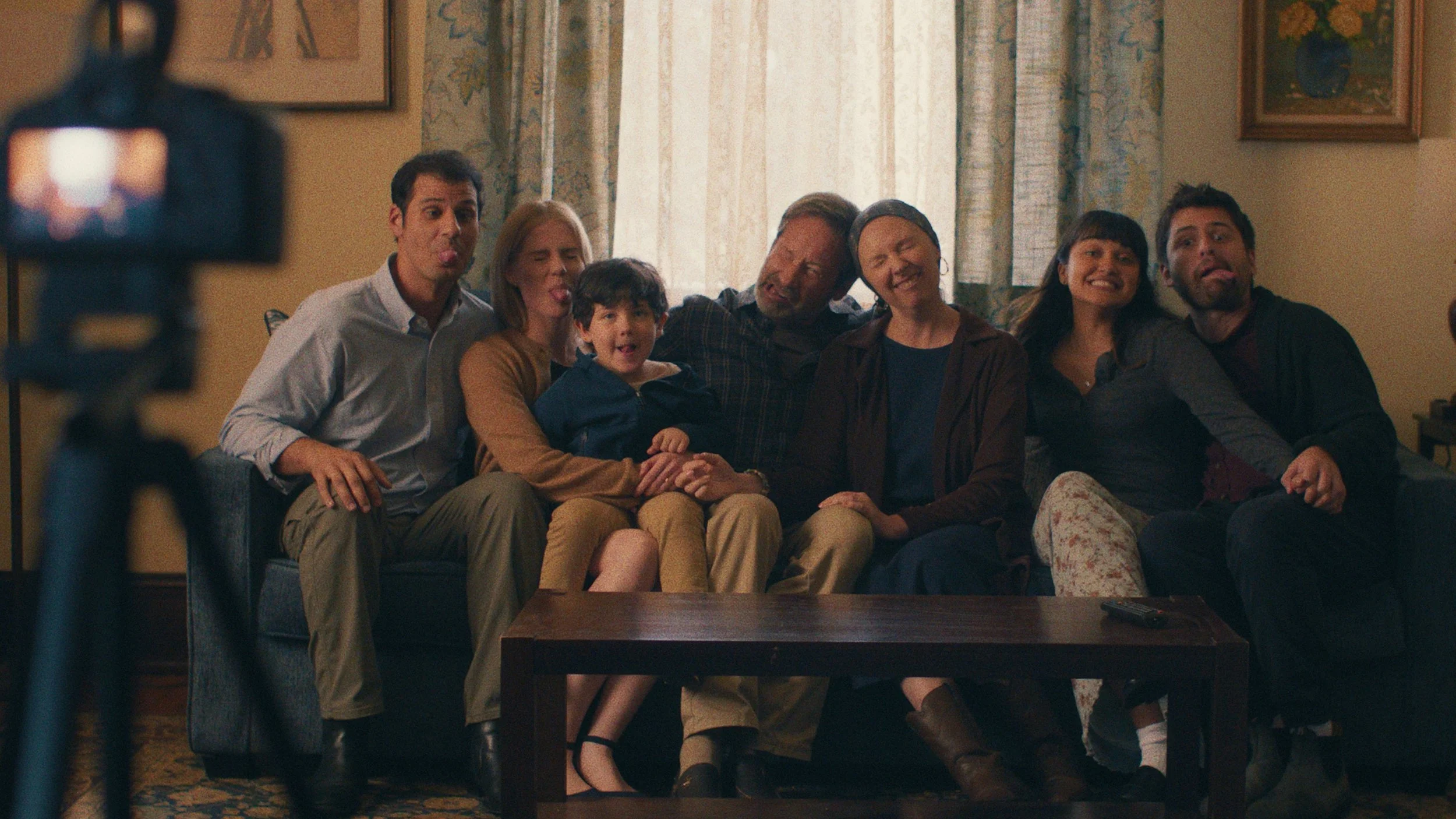
Cooper Raiff (Cha Cha Real Smooth) stars as Aaron, a hangdog boozer reeling from the recent death of his sister Leah (Kaitlyn Dever). They were the best of friends, sharing a bond that he has never quite developed with his older sister Emily (Lucy Boynton). Their parents, Robert (David Duchovny) and Paige (Hope Davis), are also lost in their relationship with Leah’s passing. Two months removed from her death, no one can agree on a funeral, a memorial service, or anything that allows the family to begin to move on from their shared tragedy.
Strong on relationships, Duplass uses those interpersonal dynamics to create conflict, disruption, and momentary healing. We have a family unable to communicate, hiding secrets, and punishing those who try the hardest to work to make things better. Robert is trying to understand why Paige is pulling away. Emily is trying to restore a law practice with her dad, while asking him to please refrain from bringing up Leah’s death to every client. Aaron plays hot-and-cold with his girlfriend Camila (Ariela Barer), whose error in judgment was apparently holding Aaron accountable for ghosting her for weeks and not telling her about Leah’s death.
Perhaps the problem here is that, in reality, David, Emily, and Camila are not bad people. Frankly, neither are Aaron or Paige, but we are forced to spend a great deal of time sympathizing with people who are, quite frankly, really hard to defend and support with their actions. Again, Cayton-Holland is able to write the complexities of his characters effectively on a written page. On screen, Duplass relies on Raiff a lot. While a talented actor, even he is stretched thin by having to often be the selfish antagonist, framed and presented as existing within a protagonist’s body.
The wincing score, composed by Jordan Seigel, makes this feel really melodramatic and moments depicting Aaron’s grief - imagined conversations with his sister that end abruptly when she is sucked up through a hole in the universe - feel extremely heavy-handed and on-the-nose.
Maybe there is something to be said about how Emily and Camila try and move on with their lives, only to get sucked back into the grief and drama surrounding them. Perhaps See You When I See You is presenting the journey through grief and trauma as one of casualty and victimization. Duplass’ film forces us to stay in a similar mindset for 101 minutes.
Watchable, but grueling at times, I just didn’t find a lot of reasons to want to see any of these people again. In the end, when a toast is given, smiles and hugs are shared, and healing begins through a shared story, I found myself emotionally exhausted instead. It was as if Aaron’s demeanor had transposed onto me, which likely is not the way Duplass and Cayton-Holland intended to send audiences home from the theater.
See You When I See You was screened as part of the 52nd Seattle International Film Festival.