
Michael Ward on Thursday, May 14

THE LIFE WE LEAVE
86 Minutes
Director: J.J. Gerber
★★★★
The best documentaries are the ones that introduce us to things we otherwise would never see. The phrase “ecological disposition,” or the word terramation (a/k/a “human composting”) is something that sounds like science-fiction or the stuff of conspiracy theories. In fact, the word “terramation” triggers a misspelling notification every time I type the word in my writing platforms.
Within a few minutes of watching The Life We Leave, J.J. Gerber’s excellent look at burial and funeral innovation, we are drawn into a world we likely have not experienced. And I have to admit … I was hooked.
There are no conspiracies, no crazy sci-fi happenings here. A northwest company, Return Home, provides a service that turns a loved one into rich, living soil that then “return(s) their life to the earth in the most literal and beautiful sense.” Founded by tech entrepreneur Micah Truman, Return Home was met with immediate dismissiveness by a traditional funeral industry. As the film points out, the death care industry has been built for more than 100 years on essentially two options on how to honor those who have passed away - burial and cremation. Truman’s idea radicalized what was easy and established.
Plus, turning human beings into compost and distributing them as soil to help grow new things is either beautiful or blasphemous, depending on your viewpoint. Religion, morality, personal belief, life experience, and honoring one’s final wishes all contribute to the end-of-life decisions we make.
As Gerber shows us, Truman does not give up easily. A workaholic, he persists and eventually wins over skeptical funeral directors, scientists, and industry professionals. He secures a business partner to help structure and design his business. Deceased pigs are used to test the process and we are there when Return Home secures its first client - a young woman whose wife tragically died from a rare form of cancer.
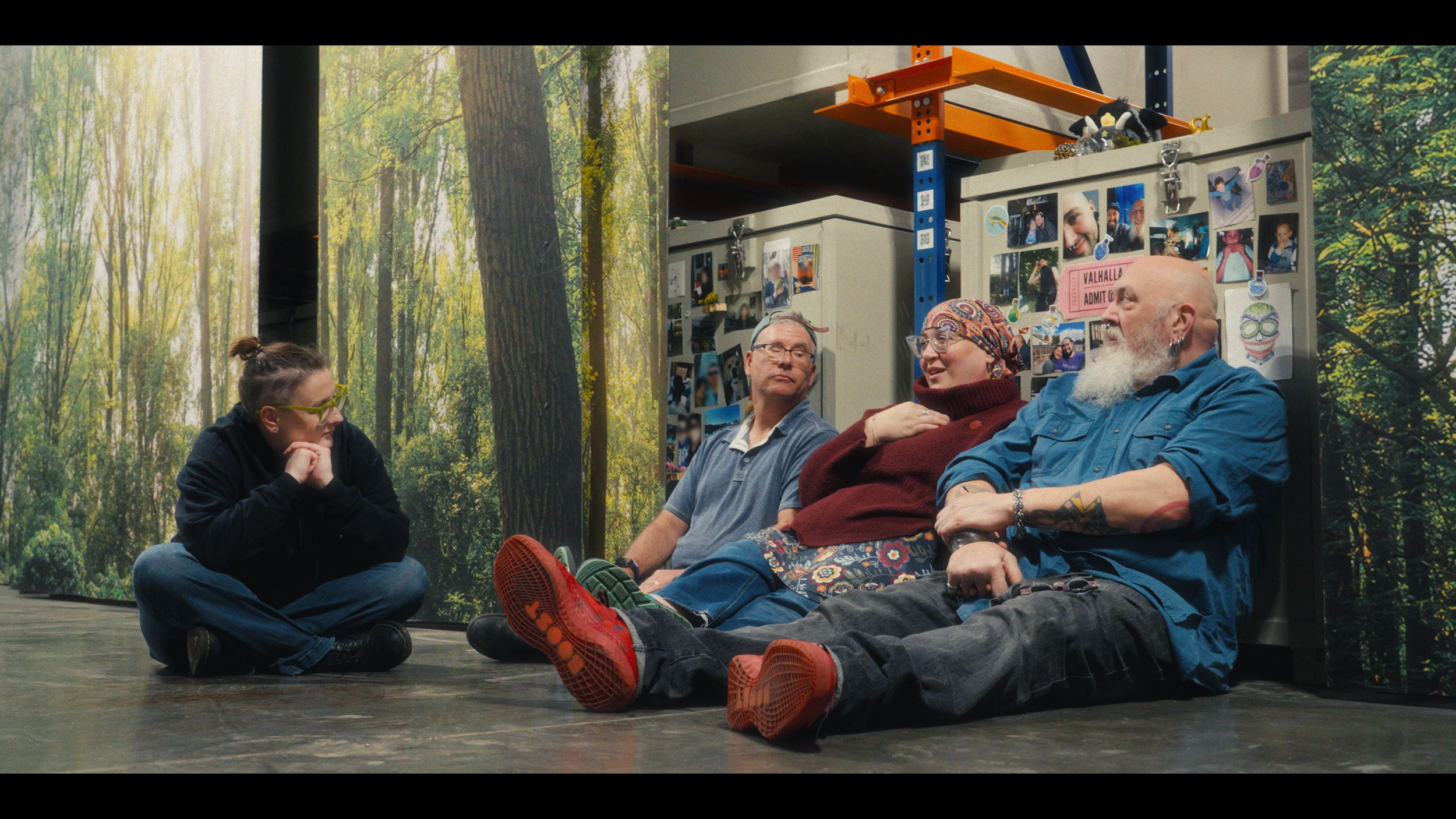
In 2019, Washington became the first state to allow human composting. Currently, 14 states allow human composting and the process has grown and matured over time. When Truman started Return Home, he had no vision for the experience of the family coming to his facility. After hiring funeral industry professionals, the business transformed from a stale, colorless warehouse to a vibrant, forest-like office space where families are encouraged to come and visit during the terramation process and even hold parties celebrating their loved ones.
Though there are facts presented about the impacts the death care industry has on the environment, and other considerations that make terramation a much more eco-friendly alternative, Gerber’s film stops short of advocacy or hagiography of its subjects. There is a notable restraint here that recognizes skepticism and resistance, and simply tells the Return Home story in a measured and kind-hearted manner.
Gerber’s film transitions from one of business practice to one of care and nurturing. The funeral directors Micah hires, Brie and Katey, bring comfort and expertise to the emotional aspects of death and dying that Micah was not ready or prepared for. He learns, as we do, just how delicate and emotional this work can be for people we often assume compartmentalize grief from their personal lives. Here, Gerber captures those feelings intertwined, as Brie reads a last story to an infant who has tragically lost their life.
The Life We Leave never sensationalizes anything it presents, though deeper into the film we see more of the preparation process than at the beginning. Gerber eases us into these moments as our own level of comfort adjusts with what is being presented and shared. So as we see an open container and a family gathering around it - we are not shocked or offended. We see a family processing grief, believing that they are honoring the wishes of their loved one. There is no judgment. Even if this is not anything you would want for yourself or your loved ones, it is hard not to see why a growing number of people are turning to this as an option.
Gerber’s film makes one consider that how we leave this world may matter less than what we choose to leave behind. Is death an ending, or merely a continuation?