
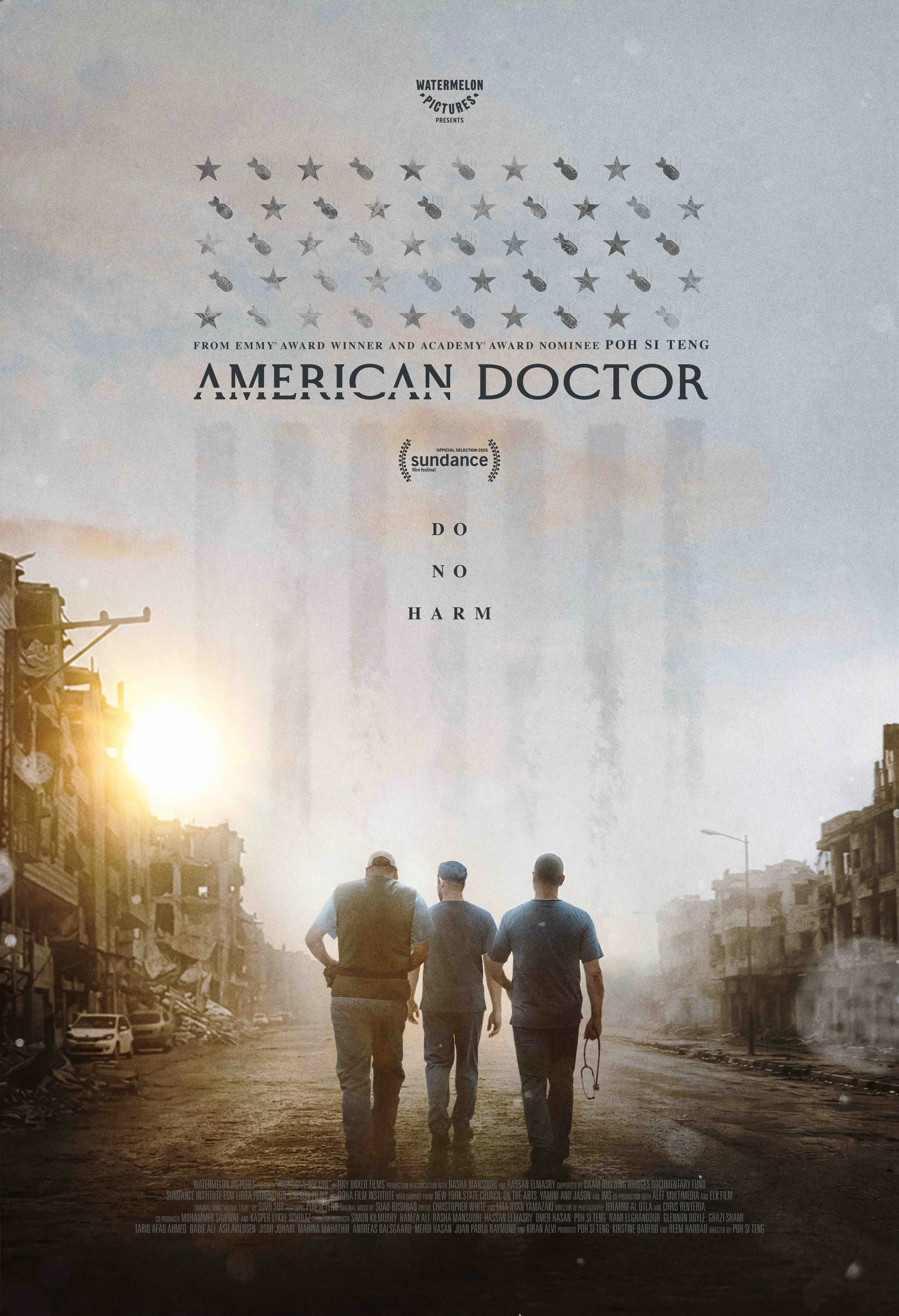
American Doctor (2026)

SHOULD I SEE IT?
YES
Provides a powerful, unflinching look at doctors working amid the devastation in Gaza.
Paced by exceptional editing, each physician’s story develops its own rhythm and personality.
Unflinching and difficult, but never exploitative, American Doctor uses raw cinematography and a cinema vérité presentation to create on of the year’s best documentaries and films.
NO
The film retains a clear political perspective, which may challenge viewers looking for a broader examination of the ongoing Israel-Gaza conflict.
The doctors’ viewpoints and observations remain largely unchallenged over the course of the film.
Graphic images of injured and deceased people, including children, will be extremely difficult for some viewers.
OUR REVIEW
In the opening moments of Poh Si Teng’s documentary, American Doctor, we are faced with the choice of turning away or continuing to watch. In a powerful prologue, Dr. Mark Perlmutter is discussing the things he has witnessed serving in Gaza. When he finds a photo on his laptop, Teng walks on camera and says she will obscure that particular image. Feeling uncomfortable about placing it in her film, she seeks to preserve dignity. The image, of dead Palestinian children lying next to each other in a hospital, is crucial, argues Perlmutter. Not showing it would be a form of “journalistic malpractice” he claims and Teng ultimately allows the image to be seen.
That moment, like so many in American Doctor, never feels exploitative. Instead, it establishes Teng’s willingness to show us things difficult to see. Her subjects: Perlmutter, a Jewish American orthopedic surgeon from North Carolina, Thaer Ahmad, a Palestinian American emergency physician from Chicago, and Feroze Sidhwa, a Pakistani/Zoroastrian American trauma surgeon from California, all bring different faiths, backgrounds, and life experiences to their humanitarian work. That dynamic is, in part, why American Doctor evolves into such a fascinating and powerful film.
Doctors take an oath to serve and don’t have the luxury of looking away. For these doctors, their humanitarian work takes them to war-torn Palestine, and specifically, the Nasser Medical Center in Gaza, during the ongoing Gaza War. Teng navigates the different mindsets and temperaments of her doctors as they arrive and work in the region.
Perlmutter wears his heart on his sleeve and is blunt and honest about his anger and emotions around what he has experienced. Ahmad is measured, steady, and a husband and father of two young children. Sidhwa is the loudest activist of the three, media-trained and a pundit on cable news channels in the U.S. and abroad, who uses a calm but intense demeanor to report on what he sees and believes.
Despite holding the same credentials as his peers, the film shows Ahmad being denied entry into Gaza by the Israeli government because of his Palestinian heritage. Forced to remain in neighboring Jordan, he returns to the United States to advocate against continued use of financial and military support for Israel during the ongoing conflict.
Teng subtly shifts the tempo of her film based on who is on camera. As a result, the editing and rhythm of American Doctor, masterfully paced by Christopher White and Ema Ryan Yamazaki, become emblematic of what each doctor brings to their work. Inevitably, that rhythm is shattered when another bombing or attack sends casualties to the hospital.
The film does not hide its lack of political neutrality. It is deeply critical of the actions of the Israeli military and ongoing American support for Israel and Benjamin Netanyahu’s leadership.
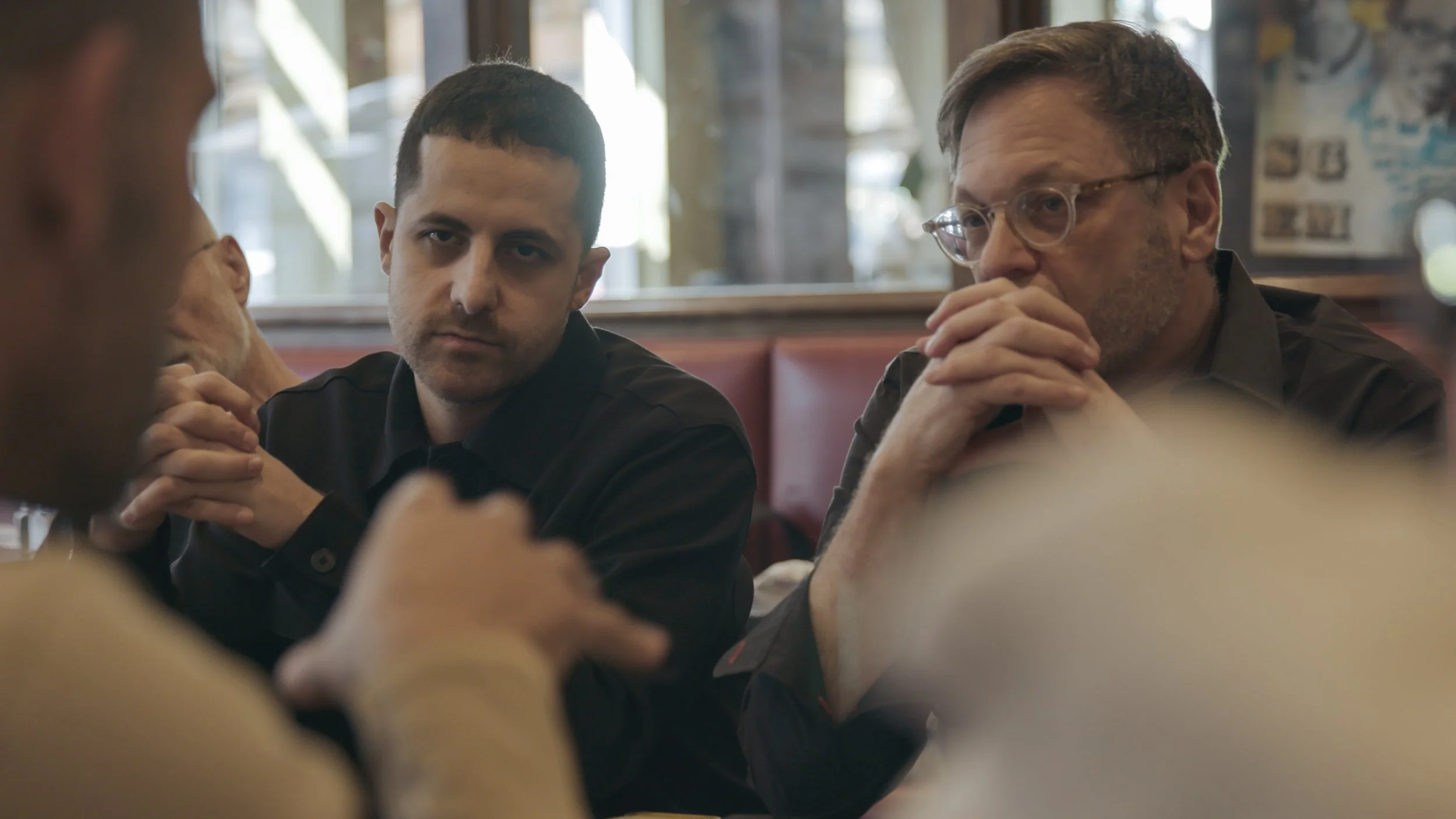
During the course of the film, Nasser is bombed twice, including a strike in August 2025 which killed nearly two dozen people, including healthcare workers and journalists. Sidhwa uses these attacks to publicly demand an answer as to why bombing hospitals is ever allowable. All of this raises an important question: does the film’s perspective compromise the overall message or simply define the story Teng has chosen to tell?
All documentaries will claim a reason for being made. And as Teng’s reasoning is made clear, another thing becomes vitally important to consider: these are three doctors responding to the very real human consequences of war. They could stay home. They don’t. Regardless of one’s perspective on the Israel-Gaza war, it is hard to not be moved by their willingness to enter into such a dangerous environment to save strangers’ lives.
For the viewer, this can be, at times, a very tough watch. Taking a cue from the opening of the film, Teng does not shy away from showing us the emergency rooms where maimed and badly injured children are being treated. The work of Gaza-based cinematographers Ibrahim Al Otla and Christopher Renteria is remarkable, as they embedded with the medical professionals, enduring threats of bombardment, power outages, and food shortages.
We see the after-effects of bombing raids and bodies lying in the rubble. We witness suffering and the impacts of war. The anger and pain and anguish is all here. However, Teng doesn’t linger longer than she needs to. She stays only long enough to give us a sense of the nearly-impossible demands placed upon these medical teams.
Though some may see the overall approach as manipulative, the suffering of a child is not theoretical.
American Doctor attempts to serve as both a call to action, speaking out against the atrocities of man-made war, while also humanizing the people on the front lines of the everyday pain and suffering. Teng should be commended for digging beyond the headlines and the punditry and showing us a facet of the war that we seldom see and can easily just turn away from. There is an urgency to her film. A demand for people to care.
Whatever political arguments surround American Doctor, Poh Si Teng keeps returning our attention to three simple things: a doctor, a patient, and the obligation to try to save a life.
CAST & CREW
Featuring: Thaer Ahmad, Mark Pelmutter, Feroze Sidhwa
Directed by: Poh Si Teng
Release Date: August 14, 2026
Watermelon Pictures/MPI Media Group