
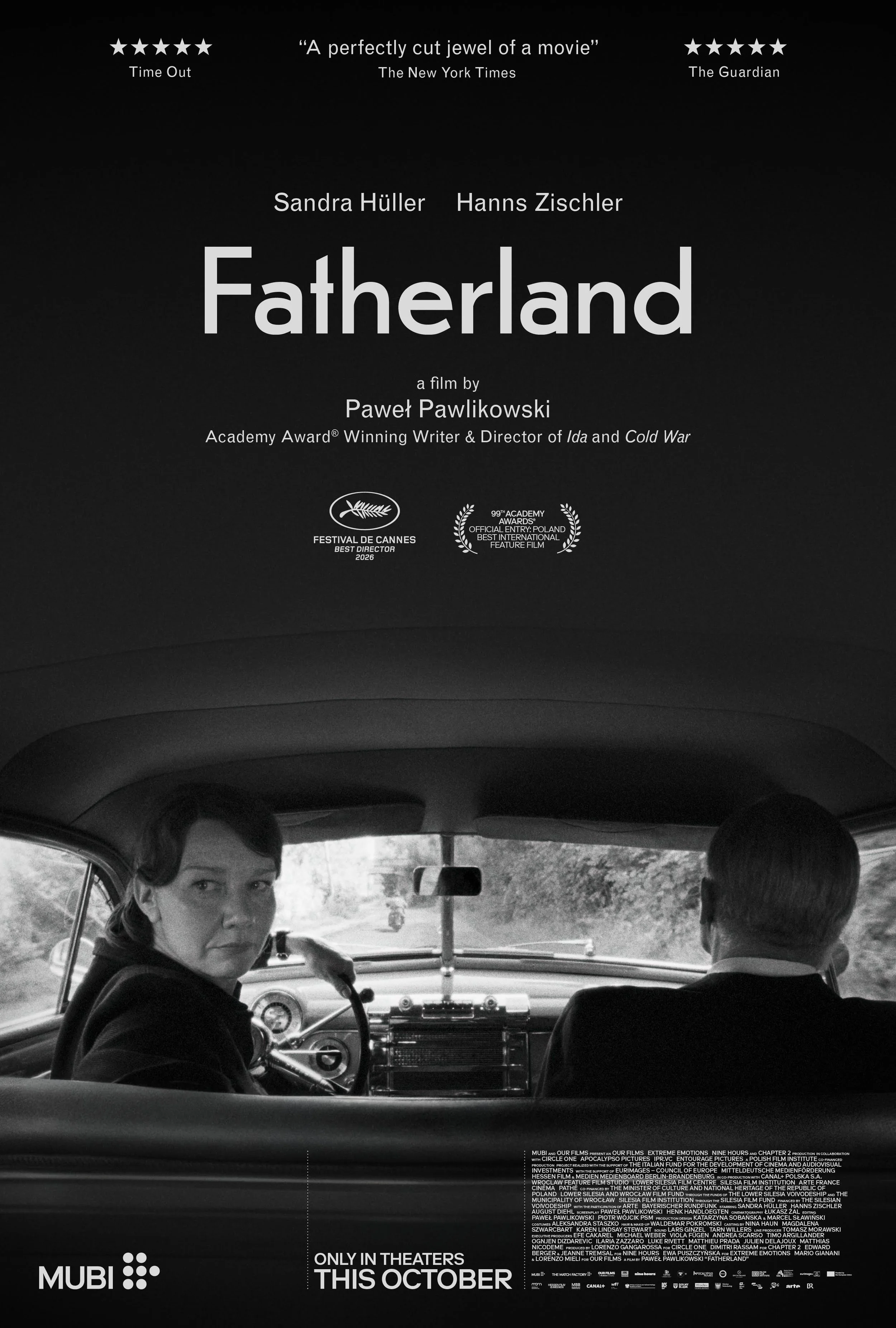
Fatherland (2026)

SHOULD I SEE IT?
YES
Sandra Hüller’s layered, emotionally compelling performance is another example of her operating at the top of her game.
The film retains a gorgeous monochrome photographic look and feel, complemented by impressive costumes and production design.
An extraordinary church sequence delivers one of the year’s most powerful movie moments.
NO
Poland’s selection for the 99th Academy Awards may lose some viewers who lack context or knowledge about the main characters.
Dialogue-heavy scenes keep us an arm’s length away from the emotions being conveyed on screen for much of the film’s runtime.
While I can always appreciate brevity in filmmaking, the film’s scant storytelling time impacts our connection to the relationships being shared with us on screen.
OUR REVIEW
Directed by Paweł Pawlikowski (Ida, Cold War), Fatherland is a visually stunning, tenderly acted drama, finding moments of emotional power while reaching for more meaning than its somewhat slight storytelling allows. The film leaves an impression, but often feels stunted in its explorations.
Sandra Hüller, who appears in as many as six films hoping to land Oscar nominations this year, shines in Fatherland with her portrayal of Erika Mann, daughter of Nobel Prize-winning novelist Thomas Mann (Hanns Zischler). Working alongside him as a personal assistant and caretaker of sorts, Erika joins her father as he returns to Germany after years of exile following their fierce opposition to the Nazis and Adolf Hitler. What brings them home in 1949 are celebrations organized around the Goethe Prize, with Thomas receiving recognition in both Frankfurt, in the West, and Weimar, located in the East.
Mann sees the journey as an opportunity to affirm a shared German cultural identity, following the atrocities of World War II. However, a family tragedy complicates already tenuous relationships. As Erika attempts to defuse distractions and keep her father moving forward, the realities of a Germany forever changed become unavoidable.
Shot in gorgeous monochrome by Academy Award nominee Łukasz Żal, Fatherland frequently feels authentic to its period, with some shots as visually remarkable as still photographs. There’s a potency to the absence of color as Thomas and Erika reckon with a place that once felt like home, but now feels cold, mysterious, and altered.
The costumes and production design contribute considerably to that effect. We see a broken Germany and people trying to present it as anything but damaged. The clothing is formal and far from shoddy or threadbare. The places the Manns visit are impeccably designed. You see a country, much like the Manns themselves, attempting to project order and recovery while hoping to conceal lingering visible damage.
Working from a screenplay he co-wrote with Henk Handloegten, Pawlikowski crafts an interesting, dialogue-heavy film that provides limited context for viewers unfamiliar with the Manns or the connections to historical events being explored.
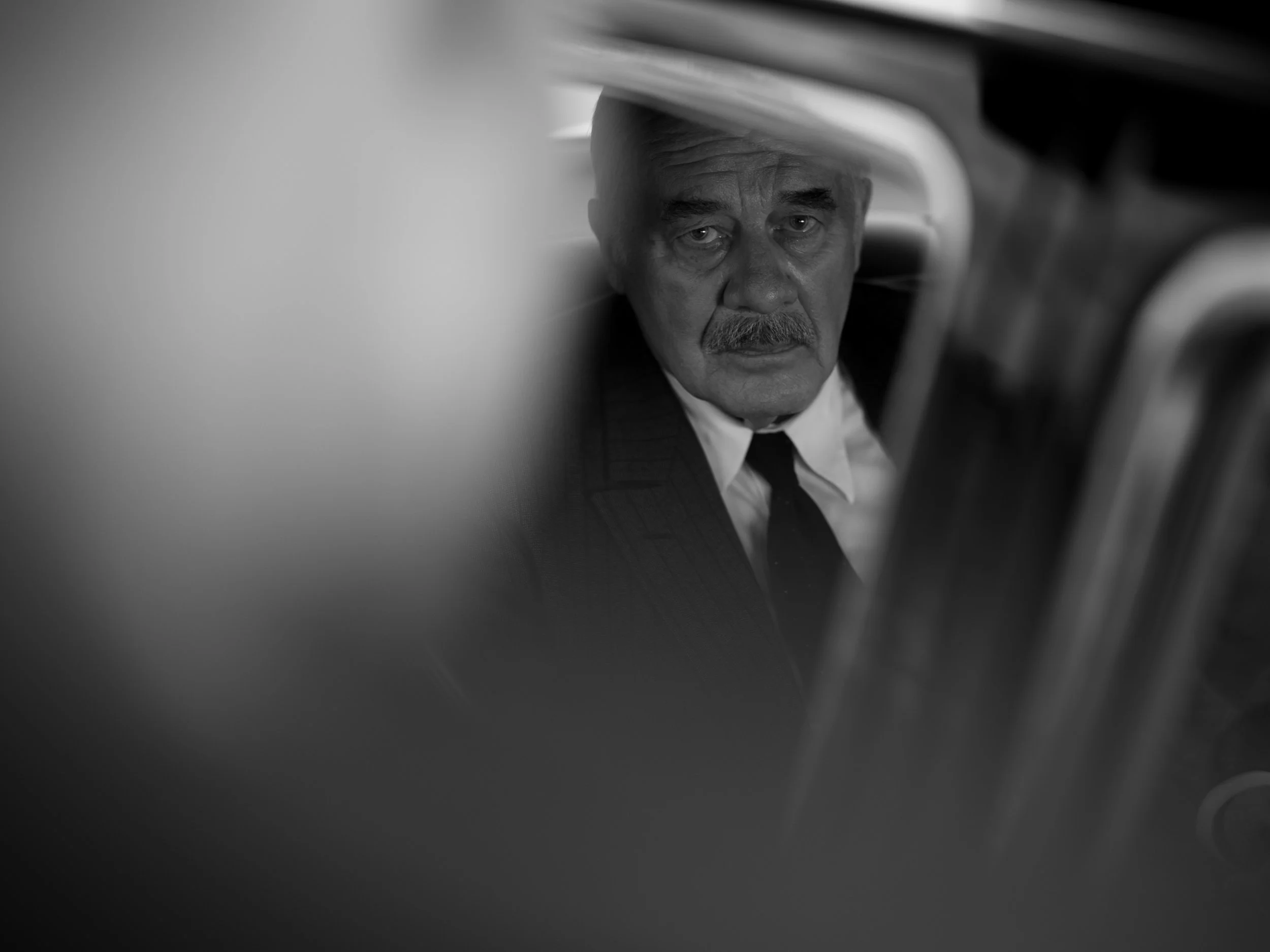
At 82 minutes, with just over 70 minutes remaining without the opening and closing credits, the movie never quite hits its stride. This brief runtime leaves us struggling to get to know these characters, even as their conversations expect us to understand complex histories between them.
Hüller is terrific at navigating concurrent emotions of loss, regret, strength, and resolve. Her presence is striking, and you can almost see her acting partners feeding off her reactions and line deliveries. As Erika, she develops an emotional complexity that left me engaged, even as the storytelling kept me at a distance.
For a movie so dependent on dialogue, the film’s best moment, and one of the year’s most powerful scenes, comes when the Manns visit a bombed-out church. As two organ tuners play Bach’s “Jesu, Joy of Man’s Desiring,” everything stops. Father and daughter sit and listen together, sharing a communal experience the film has been searching for.
In those moments, the film bares its heart and we feel the power Pawlikowski is aiming for. The distance falls away. We are present, listening to a beautiful sacred chorale as years of pain, confusion, stress, and strain find a moment of relief. The music fills the quiet of the damaged church, and we witness father and daughter sharing something bittersweet and meaningful together.
Fatherland is a very good movie, but one that misses a chance at something truly powerful, though that sequence brings it very close. Grateful as I am for those final moments, and as impressed as I am by its performances and visual craftsmanship, I think I simply needed more time with all of this then what I was unfortunately given.
CAST & CREW
Starring: Sandra Hüller, Hanns Zischler, August Diehl, Devid Striesow, Anna Madeley, David Menkin, Joachim Meyerhoff, Waldemar Kobus, Daniel Wagner, Joanna Kulig
Director: Paweł Pawlikowski
Written by: Paweł Pawlikowski, Henk Handloegten
Release Date: October 23, 2026
MUBI