
Teenage Sex and Death at Camp Miasma (2026)

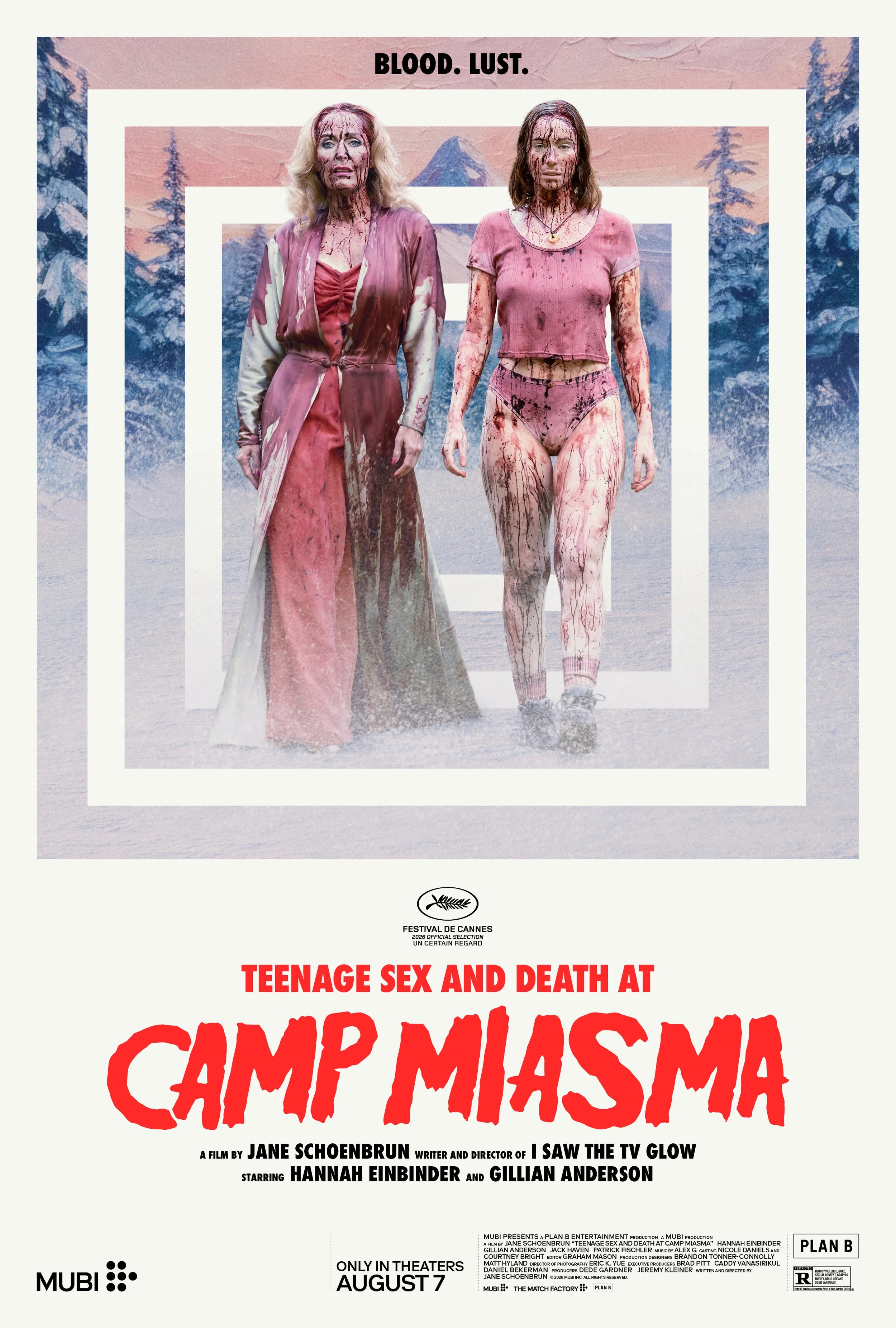
SHOULD I SEE IT?
YES
The chemistry between Hannah Einbinder and Gillian Anderson give Jane Schoenbrun’s loftier ideas an intimate and human connection.
Jane Schoenbrun’s films are unlike anything else in the marketplace. They are a gifted storyteller and here, themes of horror, camp, gore, comedy, identity, and sexuality are all fused together.
Some may dismiss this as ambiguous and hard to connect with, but Teenage Sex and Death at Camp Miasma has a lot on its mind and the film forces us to dig deeper and explore its overall message and meaning.
NO
There is a lot to process here and even the most willing participants may find Schoenbrun's themes and symbolism come at the expense of understanding a general narrative story path.
Though the film has a lot of buzz, the over-the-top gore, tonal shifts, and deliberate weirdness will make this a tough sell for wider, mainstream audiences.
With the film’s needle drop moments, comedy, occasional obvious dialogue, and over-the-top look and feel, Camp Miasma may end up feeling to some viewers like a movie that loves itself just a bit too much.
OUR REVIEW
There may not be a braver and more fearless filmmaker right now than Jane Schoenbrun. Their willingness to blend genre, play with mood, and trust that their audiences can follow liberal use of on-screen symbolism and imagery is unparalleled. With the provocatively titled Teenage Sex and Death at Camp Miasma, Schoenbrun forces their audience to challenge perceptions and dig deeper into what they are witnessing.
In 2021’s We’re All Going to the World’s Fair, a young girl becomes obsessed with an internet challenge, while 2024’s extraordinary I Saw the TV Glow used a shared love of a television show to explore gender identity and the masks we place upon ourselves to hide us away and suppress who we really are.
Now, we turn to movies and what Schoenbrun presents as a slasher horror/comedy hybrid becomes very weird and very gory. But this is also a film that explores how experiencing a “little death” can be cathartic in how we can embrace our desires and not be afraid of who and what we love.
Schoenbrun ties their trilogy of films together through a fixation on media. Where the internet and a television show were previous catalysts to discovery, here we have a fictional Friday the 13th-inspired slasher franchise known as Camp Miasma. The series made a star out of the franchise’s “final girl,” Billy Presley, portrayed in the character’s later years by Gillian Anderson. When Billy stepped away from the film series, the Miasma films got progressively less popular, cheaper, and eventually became straight-to-video schlock. Efforts to reboot the franchise consistently have failed, but there is a lingering cult following that makes it at least appear to be a potentially viable cinematic property.
At least that’s what filmmaker Kris Williams (Hannah Einbinder) believes. Having first discovered the Camp Miasma movies in her teen years, she is ready to refresh the films for a new generation. She has producers on board, her agent (Sarah Sherman) as well, and her “holy grail” is to bring Billy back to the big screen to star in her relaunch.
Kris feels, in some ways, like a stand-in for Schoenbrun themselves. As a filmmaker revisiting the film franchise that helped shape the storyteller she has become, her obsession with analyzing the films and reinterpreting them for a modern audience is absolute. If Camp Miasma is a stand-in for the influential moment that made Kris want to be a filmmaker, then this is more than an obsession. This is someone trying to recreate the moments she experienced for someone else.
The serial killer at the center of the Camp Miasma films is “Little Death,” the spear-stabbing murderer who seems to survive everything. Like Jason, Freddy, and Michael Myers before them, Little Death (Jack Haven) is both a metaphor for an awakening within oneself and a French euphemism (la petite mort) for achieving an orgasm.
Now if that provides something of a record-scratch moment, I get it. Despite fountains of blood and severed heads and limbs everywhere, Teenage Sex and Death at Camp Miasma uses that entry point to discuss how desire and death can often be linked together. How many 1980s horror films saw teen couples killed while having sex, or sneaking off to do something naughty? To desire is to become vulnerable. To willingly become intimate is to forego fear and have complete trust. Can a ‘little death’ coexist with the complete release of anxiety and fear and the surrender of control?
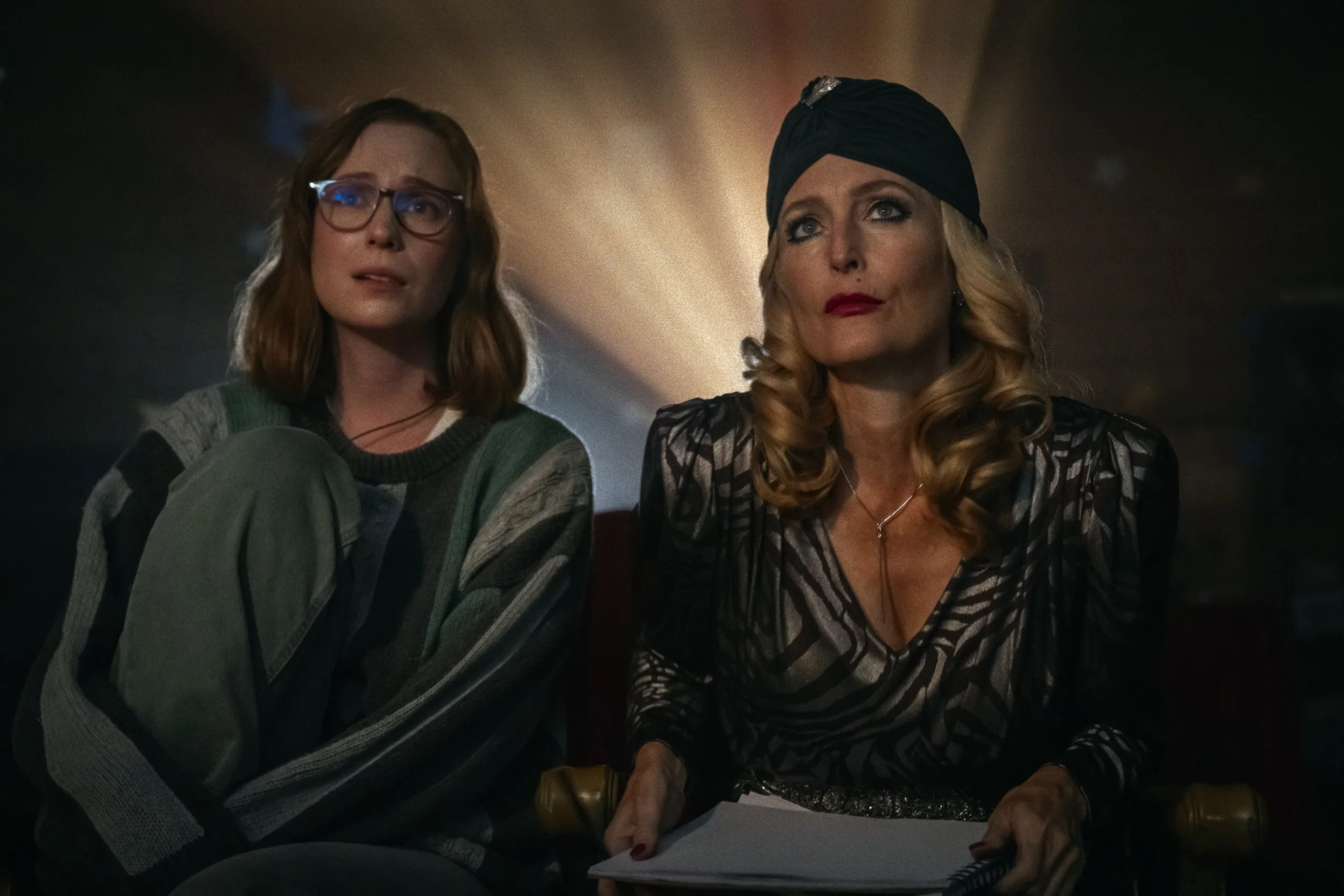
Einbinder and Anderson are a fascinating duo, spending much of the film’s first half circling around one another and getting to know each other. Anderson portrays Billy with a slow, Southern drawl, living largely in isolation at the camp used to film the Miasma movies. Einbinder is really terrific as a director who recognizes a “split diopter” shot in a cheesy horror film just as easily as she can become enamored and seduced by Billy’s inviting presence.
Burned and abused by her experiences making the Camp Miasma films, Billy remains surrounded by memories of her time on set. The very thing she ran away from is what still provides for her. While Kris can psychoanalyze Camp Miasma movies to a scholarly level, Billy’s reflection of them is far more simple; namely, the movies showcase two things: flesh and fluids.
Our bodies are indeed vessels for fear, anxiety, adrenaline, violence and emotional release, and quite literally, flesh and fluids. Schoenbrun uses all of it to explore physical awakening amid repression and the discovery of identity. Here, bodies bleed. Bodies have sex. Bodies become objects of desire. They are stabbed and destroyed, while also changing, dying, and gasping for life.
This focus on the body makes Little Death’s backstory, shown here in the guise of a film-within-a-film, both timely and tragic. Bullied incessantly by their peers before being drowned in a lake, they rise from a hole at the bottom of the lake and massacre everyone they find on the campground. Schoenbrun evokes the familiar trans slasher-killer trope, but complicates the idea by asking us not to fear Little Death, but to understand what created them.
As the film pivots back to Kris and Billy’s relationship, the closer they become, the more reality blends with fantasy. Soon, we are unsure if we are watching a Camp Miasma movie, the continuation of the story we had been following, or something else altogether.
When Schoenbrun blends everything together, their film can become somewhat tricky to navigate. Like their previous films, Teenage Sex and Death… is something that needs multiple viewings, in part to take in all the subtle details and nuances Schoenbrun and cinematographer Eric K. Yue place on screen, and also to revisit the ideas, themes, and concepts presented to us.
The film is campy, hilarious at times, but also deeply personal. Schoenbrun’s dialogue is intentional in how it veers from philosophical and heady to on-the-nose and obvious. There are also meme-able moments and quotable lines aplenty, and some inspired needle drops ranging from Counting Crows to Sade to Donna Lewis. You will also never think of chicken tender dipping sauce in quite the same way.
Teenage Sex and Death at Camp Miasma is clearly not for everyone. With so much of this film amplified to the highest degree, elements of the film can feel exhausting or challenging. However, there is such inventiveness on display here that you have to step back and be thankful that Schoenbrun has the trust and autonomy to tell stories that may strike you as odd or unconventional, but remain impossible to dismiss or ignore.
CAST & CREW
Starring: Hannah Einbinder, Gillian Anderson, Jack Haven, Patrick Fischler, Amanda Fix, Arthur Conti, Eva Victor, Jess McLeod, Zach Cherry, Sarah Sherman, Dylan Baker, Jasmin Savoy Brown, Quintessa Swindell, Kevin McDonald, Aren Buchholz, Willy McGee
Director: Jane Schoenbrun
Written by: Jane Schoenbrun
Release Date: August 7, 2026
MUBI